PPE (Personal Protective Equipment) has historically been designed and marketed around a narrow understanding of the “average” worker, typically based on Western, white, male body anthropometrics. As a result, women workers are significantly disadvantaged by poor fit.
User input is crucial to understanding how women of differing ages and cultural backgrounds experience PPE fit in various industrial settings. This captures: 1) the end-user experience of proper fit; and 2) organizational processes that shape how PPE is selected and provided.
PPE is experienced differently across sex, gender, race, ethnicity, culture, religion, age, disability, life stage—and their intersections. Variations in head shape between different ethnic groups, for example, may affect the fit of hard hats, helmets, goggles, and respiratory protective equipment. Religious and cultural practices may require PPE that accommodates turbans, hijabs, beards, hair coverings, or particular hairstyles. Age and life stage can impact body shape, mobility, comfort, skin sensitivity, and heat tolerance. Applying intersectional participatory methods helps develop effective systems of PPE real workers.
Gendered Innovations:
1. Inclusive PPE Guidance: The development of practical guidance, e.g., Putting the ‘Personal’ into PPE, helps organizations identify problems, gather user feedback, and understand the importance of procuring more inclusive PPE.
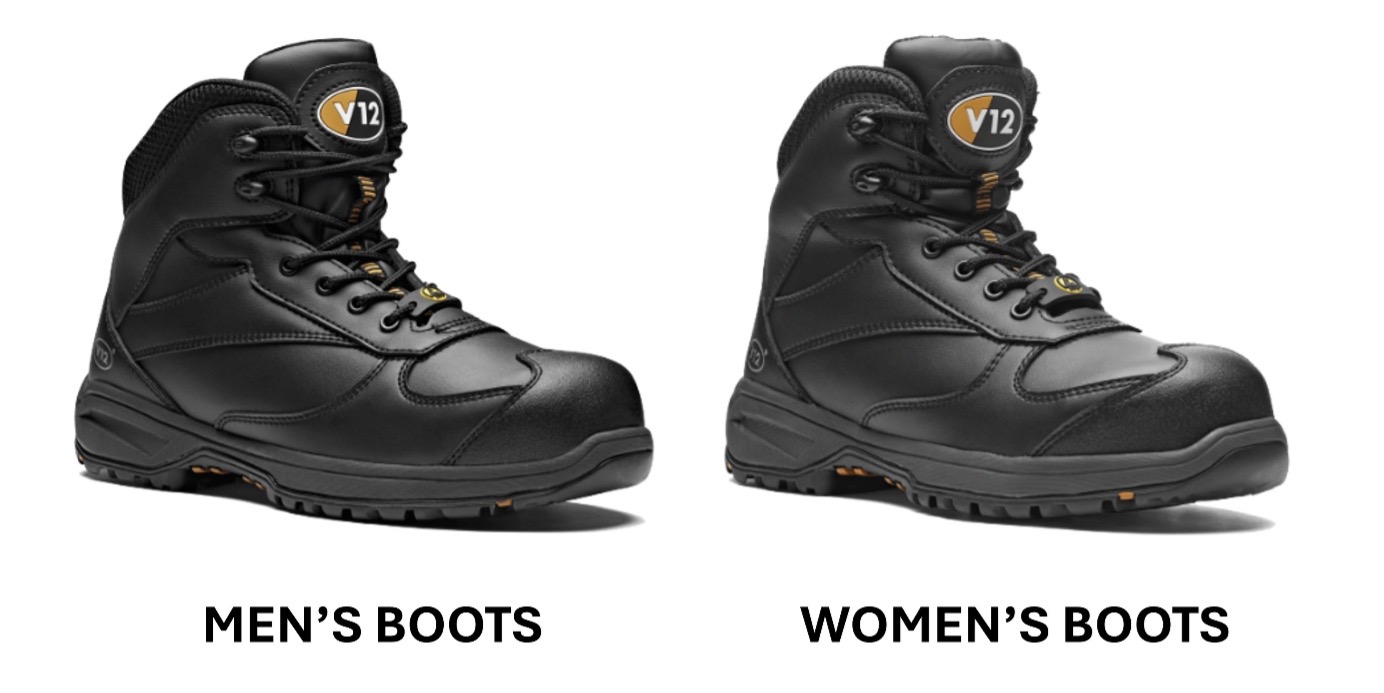
2. Same Boot, Better Fit: An industry-led co-creation project by V12 Footwear, a safety footwear company, led to the manufacture of genuine female-fit footwear that provided the same protection, performance, and visual appearance as the men’s boot, but a fit designed for women’s feet.
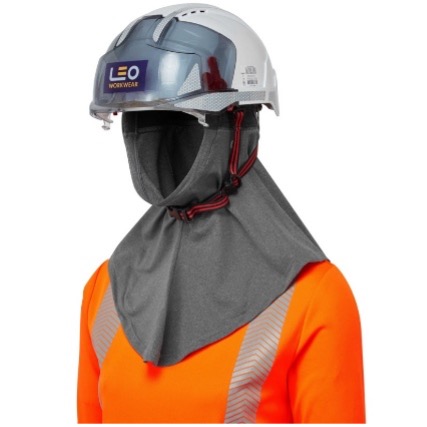
3. Leo Workwear's Hijab has been designed to facilitate the wearing of a hijab beneath a hard hat or helmet.
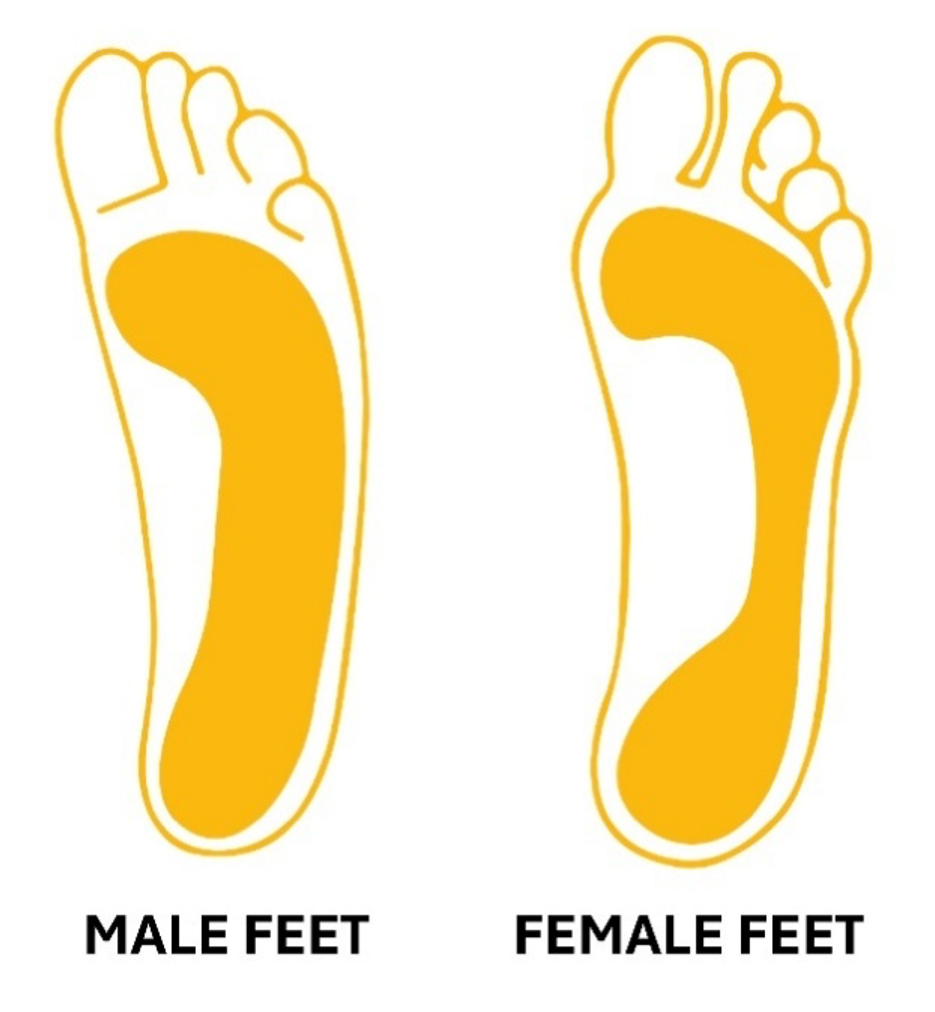
PPE (Personal Protective Equipment) has historically been designed and marketed around a narrow understanding of the “average” worker, typically based on Western, white, male body anthropometrics (Berg, 2021; Flynn et al., 2017; Onyebeke et al., 2016; TUC, 2017). This has shaped PPE provision across sectors from manufacturing and construction to healthcare, where women make up the majority of the global workforce (World Health Organization, 2024). As Figure 1 illustrates in relation to footwear, male and female bodies do not simply differ in size: they also differ in shape, proportion, and pressure distribution, and these differences further fluctuate due to hormonal shifts throughout life. This means that PPE designed around male anthropometrics cannot be made inclusive by simply offering smaller sizes.
As a result, female workers are significantly disadvantaged by poor fit. At a physical level, ill-fitting PPE can hamper their work, making it harder to walk long distances, climb into vehicles, bend, or reach than their male counterparts (Janson et al., 2024). During the COVID-19 pandemic, some women healthcare workers reported being unable to use the toilet or change menstrual products because of the PPE they were required to wear (Women in Global Health, 2021). In policing, poor-fitting body armor and uniforms have been linked to restricted movement, pain, and reduced protection, with some officers reporting that exposed areas, such as around the arm pit, made them more vulnerable in frontline roles (Hsiao et al., 2023; De Camargo et al., 2025).
Figure 1. Difference between make and female foot shapes (V12, n.d. -a)
The problems are not just physical. When PPE does not fit, it can signal that women are different, leaving them excluded or mocked. It can also undermine confidence and credibility, making it harder for women to feel (and be seen as) fully legitimate in the workplace (Janson et al., 2024).
While true female-fit PPE is increasingly available, problems persist. This raises two important questions: why do women still report poor fit, discomfort, and exclusion? And how can we ensure that everyone involved in specifying, procuring, and providing PPE understands the importance of fit?
Gendered Innovation 1: Inclusive PPE Guidance
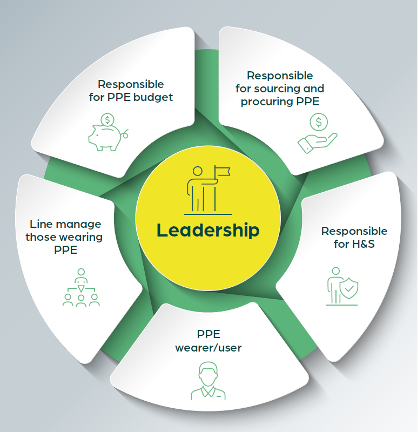
The development of practical guidance helps organizations understand the importance of procuring more inclusive PPE. Research showed that one of the reasons poor fit persists is that those involved in specifying, buying, and managing PPE may not understand the physical, behavioral, emotional, and role-related impacts of inappropriate fit (Ward et al., 2024; Women in Global Health, 2021). Poor PPE provision is often treated as a product issue, when it is also a systems issue. As shown in Figure 2, inclusive PPE provision depends on coordinated action across multiple organizational roles, including leadership, budget holders, procurement, health and safety, line managers, and PPE wearers themselves. These roles shape not only what products are selected, but also how needs are identified, how feedback is heard, how exceptions are handled, and whether inclusive PPE is treated as a priority.
Figure 2. Key stakeholders in PPE provision (Janson, 2024)
The guidance document, Putting the ‘Personal’ into PPE (Janson, 2024), was created to address this gap. It explains the origins of PPE design, the diversity of the modern workforce, and the practical and psychological consequences of poor fit. It then translates these insights into action by outlining key considerations for inclusive PPE, including sex, gender, age, role, environment, mobility, changing facilities, body shape, hair, disability, pregnancy, menopause, religion, culture, and neurodivergence. Rather than placing responsibility on one individual, the guidance shows how inclusive PPE provision depends on coordinated action across the organization.
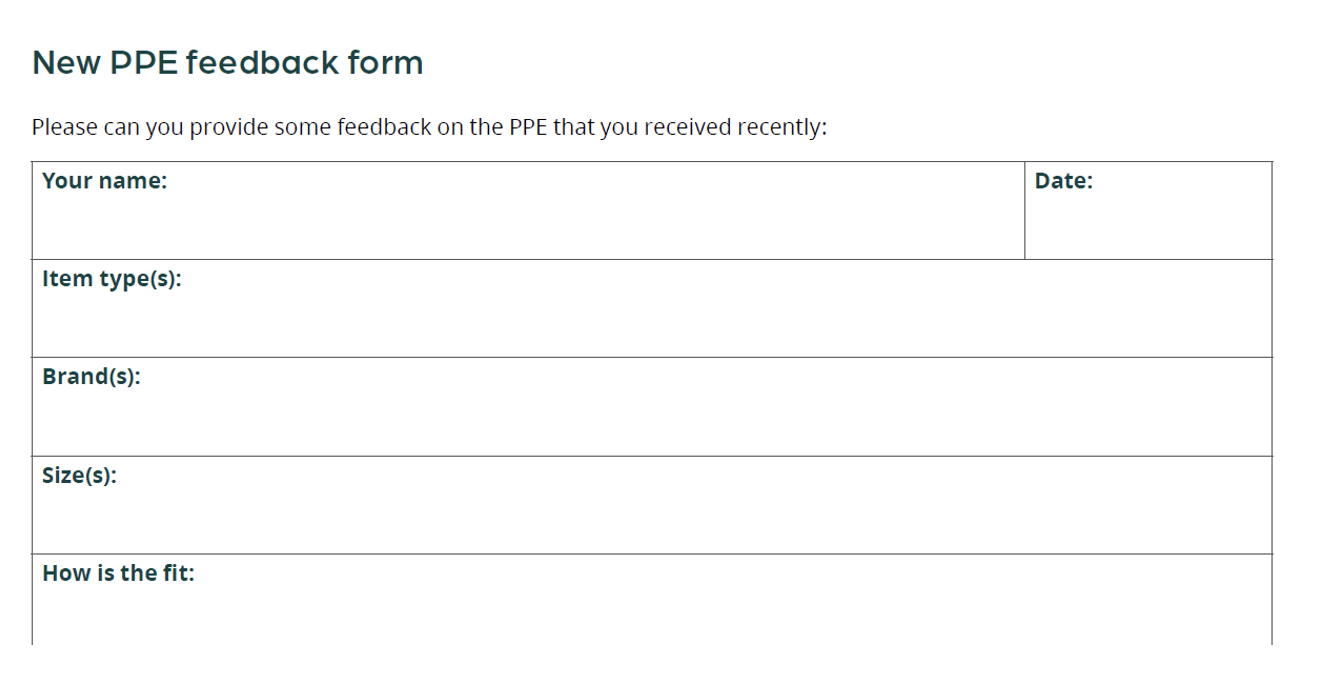
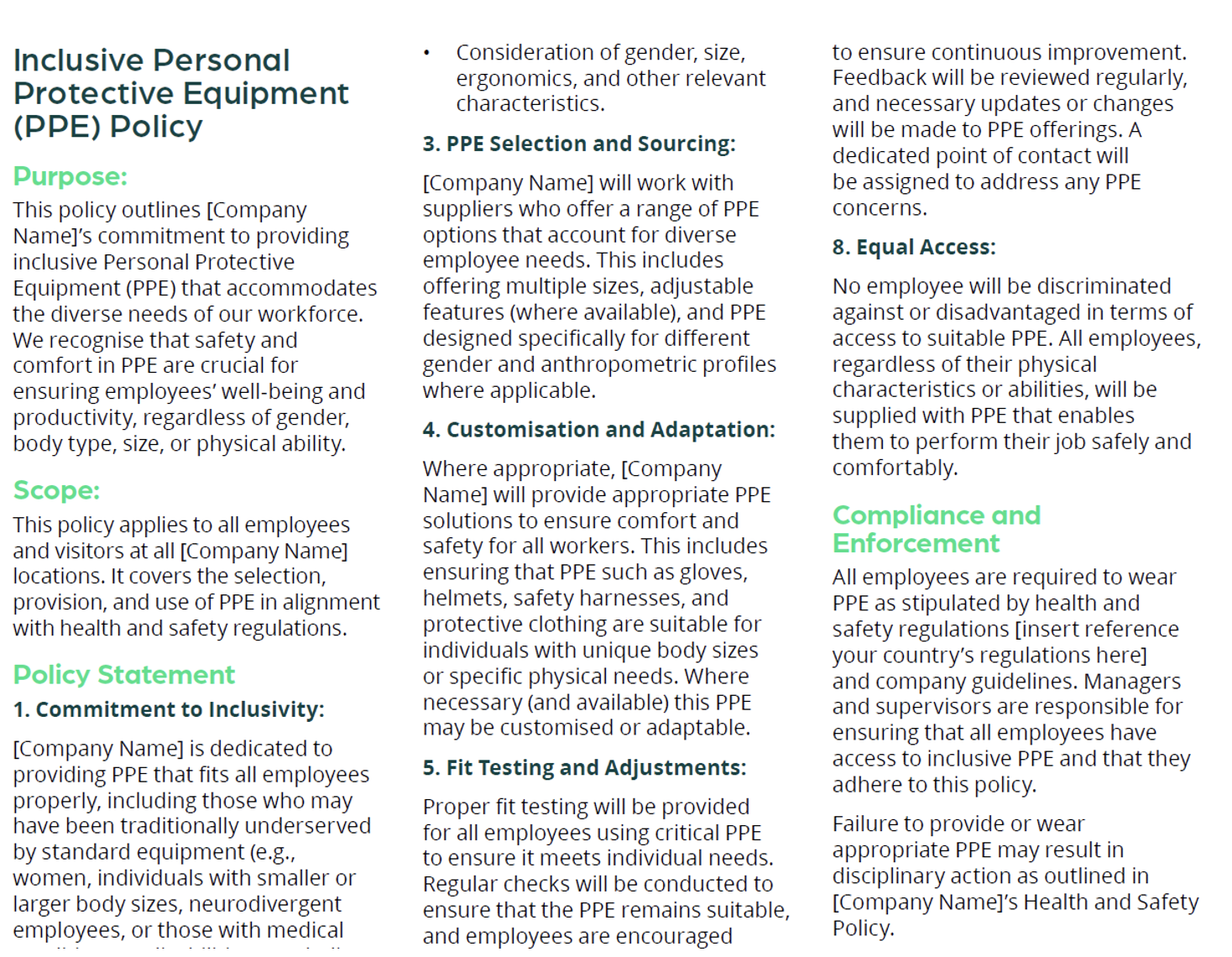
A key feature of the guidance is its role-specific approach. It provides tailored advice for those responsible for PPE budgets, procurement, management, health and safety, organizational leadership, and use. This helps different stakeholders recognize how their decisions affect workers’ safety, comfort, confidence, and sense of belonging. The guidance also includes practical tools, such as PPE feedback forms (Figure 3), satisfaction surveys, email templates, a gap analysis, and an inclusive PPE policy template (Figure 4), to help organizations identify problems, gather user feedback, and embed more inclusive PPE practices.
Figure 3. Extract from Guide - New PPE feedback form (Janson, 2024)
Figure 4. Extract from Guide - Inclusive PPE policy (Janson, 2024)
User input is crucial to understanding how women of differing ages and cultural backgrounds experience PPE fit problems in industrial settings, and why these problems persist despite the increasing availability of female-fit products. The area of work identified was women’s PPE, with a particular focus on safety footwear. Two target groups were then identified: women in industry who wear PPE as part of their work, and the people involved in specifying, buying, and managing PPE provision.
User input was gathered through interviews with women who wear PPE, alongside conversations with procurement and health and safety professionals. This helped capture both the end-user experience of poor fit and organizational processes that shape what PPE is selected and provided. End-user demonstrations and observations were also used to understand how PPE affects everyday work activities such as walking, bending, climbing, driving, and using the toilet. These methods helped reveal tacit knowledge, i.e., practical problems that workers had adapted to, normalised, or found difficult to articulate in conventional procurement processes.
The findings were then combined with procurement process analysis and a review of existing literature to evaluate where current PPE provision was failing. This informed the development of practical guidance for those working with, specifying, or buying PPE to help them make more inclusive decisions.
A second gendered innovation comes from an industry-led co-creation project by V12 Footwear (V12 Footwear, n.d.), a safety footwear company that manufactures genuine female-fit footwear alongside its male ranges. Working with female workers on London Underground trains, V12 developed safety footwear that provided the same protection, performance, and visual appearance as the men’s boot, but a fit designed for women’s feet.
This example is significant because inclusive PPE is often misunderstood as requiring visibly different or feminized products – often responding to a “shrink it and pink it” imperative (Janson et al., 2024). In this case, the women involved did not want footwear that looked “pink,” decorative, or noticeably different from men’s. They wanted the same boot as their male colleagues, but one that fit and protected them properly. This demonstrates the value of co-creation: rather than assuming what women would want, the design process allowed women to define their own requirements.
The insight also reflects wider research on women’s experiences in male-dominated workplaces. R. M. Kanter’s work on tokenism describes how under-represented groups can experience heightened visibility, polarization, and pressure to assimilate (Kanter, 1977). In such contexts, visibly different PPE might unintentionally reinforce women’s difference, making them stand out further in environments where they may already feel highly visible. The innovation was therefore not simply making a “woman’s boot,” but recognizing that social as well as physical fit matters.
The V12 project shows what can happen when manufacturers co-create with users rather than designing from assumptions. Female-fit footwear that looks the same as male footwear is not a failure to recognize women’s needs; it is a response to them. It enables women to be properly protected while maintaining the same professional appearance as their male colleagues.
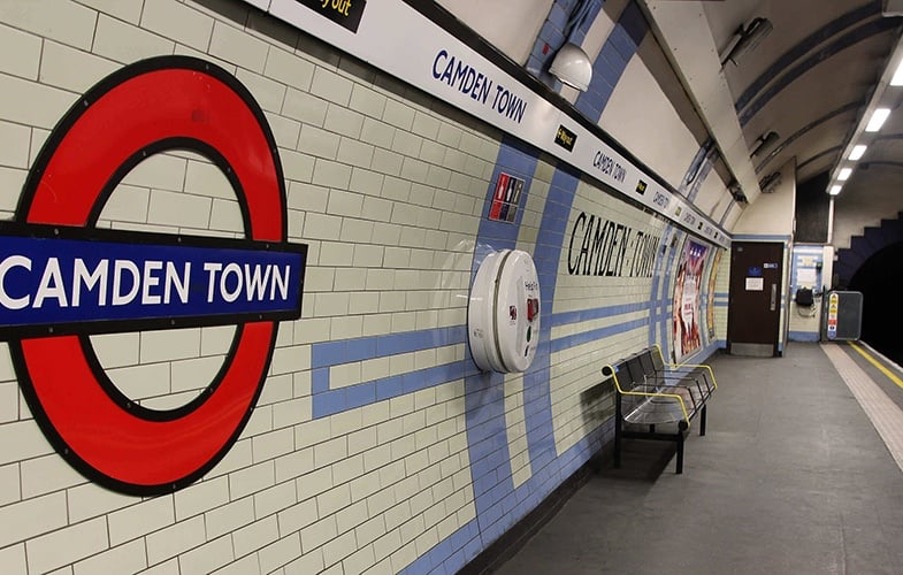
In this industry-led example, V12 used participatory research and co-creation to identify what female workers needed from safety footwear in both physical and social terms. The area of work identified was safety footwear for women working on London Underground (Figure 5) trains for Transport for London, where the footwear needed to meet the same functional and protective requirements as that worn by male colleagues. The target group was female workers who wore safety footwear on the job.
Figure 5. London Underground (V12, n.d.-b)
User input was central to the process. Rather than assuming that women wanted visibly different PPE, V12 worked with women workers to understand their priorities, preferences, and workplace context. This revealed that the women wanted footwear that fit their feet properly but looked the same as the men’s. The design requirement was therefore not simply to make a “female version,” but to create female-fit footwear that provided equivalent protection, comfort, and professional appearance.
This example demonstrates how co-creation can reveal requirements that may be missed through conventional product development. Inclusive PPE must address anatomical fit, but it must also consider the social context in which PPE is worn. By listening directly to women workers, the resulting footwear supported safety and comfort while also helping women avoid being made more visibly different from their male colleagues. It is now commonplace for V12 to offer the same boot style in both male and female fit as per Figure 6.
The same Gendered Innovations methods can be extended beyond sex and gender to examine how PPE is experienced differently across intersecting factors such as race, ethnicity, culture, religion, age, disability, and life stage. Participatory research and co-creation are particularly useful here because they avoid assuming that one “inclusive” solution will work for everyone. For example, anthropometric differences, such as variation in head shape between different ethnic groups, may affect the fit of hard hats, helmets, goggles, and respiratory protective equipment. Religious and cultural practices may also shape PPE requirements, including the need to accommodate turbans, hijabs, beards, hair coverings, or particular hairstyles without reducing protection or placing responsibility on the wearer to “adapt” themselves to unsuitable equipment, as seen in the example of the Leo Workwear’s Hijab. Age and life stage also matter: body shape, mobility, comfort, skin sensitivity, and heat tolerance can change over time, including during pregnancy, perimenopause, and menopause. Applying participatory and intersectional methods therefore creates an opportunity to move beyond simply offering male and female PPE, and instead to develop systems of PPE provision that recognize the diversity of real workers and the contexts in which they work.
Women and men can differ in their needs for, and experiences of, PPE. These differences are anatomical, and also practical, social, and professional, affecting safety, comfort, mobility, confidence, credibility, and sense of belonging at work. Historically, PPE have often been designed around a narrow model of the “standard” worker, leaving many women and other under-represented groups poorly served by equipment intended to protect them.
This case study shows that analyzing sex, gender, and a variety of intersectional factors as well as involving users and stakeholders directly in PPE design, selection, and procurement can lead to better outcomes. Participatory research and co-creation help reveal problems that may otherwise remain hidden, including how workers adapt their behavior or accept discomfort as normal. They also show that inclusive PPE is not just a product issue, but a systems issue involving manufacturers, suppliers, employers, procurement teams, health and safety professionals, line managers, and PPE wearers themselves.
Applying Gendered Innovations methods to PPE design and provision creates an opportunity to improve both protection and inclusion. Extending these methods to consider intersectional factors such as race, culture, religion, age, disability and life stage can support PPE systems that better reflect the diversity of real workers and the environments in which they work, allowing them to be more productive and effective.
Next Steps
1. Scale inclusive PPE standards internationally. Policy makers, regulators and standards bodies should strengthen expectations for inclusive PPE provision. In the UK, BS 30417 (2025) provides an important example of how inclusive PPE can be addressed through formal guidance, but this approach now needs to be shared and adopted internationally. Future standards should make clear that PPE suitability includes fit, comfort, and usability for the diverse workers required to wear it, not technical compliance alone. This should include sex, gender, and intersectional factors such as body shape, race, ethnicity, culture, religion, age, disability, and life stage.
2. Embed inclusive PPE into organisational practice. Standards and policies are important, but they will only improve outcomes if they are implemented in everyday safety and procurement systems. Employers should build inclusive fit and user feedback into PPE specifications, supplier selection, onboarding, risk assessments, PPE issue processes, incident investigations, and routine safety audits. Workers should be involved before products are selected or renewed, rather than only after problems arise.
3. Co-create and evaluate the next generation of inclusive PPE. Manufacturers and researchers should use participatory methods with diverse PPE wearers to identify both physical and social requirements. Future innovation should move beyond smaller sizes or simple male/female ranges to develop PPE that reflects the diversity of real workers and the contexts in which they work. Research should evaluate whether inclusive PPE improves safety, compliance, comfort, mobility, confidence, credibility, wellbeing, productivity, and belonging.
De Camargo, C., Wallace, S., Fairclough, L., Khan, S., Mader, Z., Goodwin, B., & Sha, Y. (2025). National Uniform & Equipment Survey.
Flynn, M. A., Keller, B., & DeLaney, S. C. (2017). Promotion of alternative-sized personal protective equipment. Journal of Safety Research, 63, 43–46. https://doi.org/10.1016/j.jsr.2017.08.004
Janson, D. J., Dhokia, V., Banks, K., Rodohan, J. H. D., & Clift, B. C. (2024). PPE: Pockets, Perceptions and Equity–the untold truth of PPE: a reflexive thematic analysis. International Journal of Occupational Safety and Ergonomics.https://doi.org/10.1080/10803548.2024.2404748
Kanter, R. M. (1977). Some effects of proportions on group life: skewed sex ratios and responses to token women. American Journal of Sociology, 82(5), 965–990. https://www.jstor.org/stable/2777808
Onyebeke, L. C., Papazaharias, D. M., Freund, A., Dropkin, J., McCann, M., Sanchez, S. H., Hashim, D., Meyer, J. D., Lucchini, R. G., & Zuckerman, N. C. (2016). Access to properly fitting personal protective equipment for female construction workers. American Journal of Industrial Medicine, 59(11), 1032–1040. https://doi.org/10.1002/ajim.22624